Book illustrations can take a boring story and turn it into something really cool to look at. Magic takes place when words collide with art. Children laugh at funny personalities. Adults take time to appreciate small scenes. This wow factor is warranted in your book.
But where do you start? The trip could be daunting. Fear not. This tutorial takes you through each process. We do the first sketch to the last print. We will make your vision come to glorious pictures.
Why Illustrations Matter in a Book
Illustrations do more than decorate pages. They shape how readers experience a narrative. A compelling drawing can:
- Develop emotion by picturing emotions that might not be fully explained in words.
- Break down cumbersome concepts by using pictorial images that simplify difficult concepts.
- Enhance the identity of characters by providing faces, expressions, and details that make personalities very clear.
- Memory can be improved through the use of visuals and text to enhance comprehension and recollection.
- Enhance the visual representation of tales by impressive drawings that create a memorable effect.
Great visuals create timeless impressions. That’s the power of intentional design.
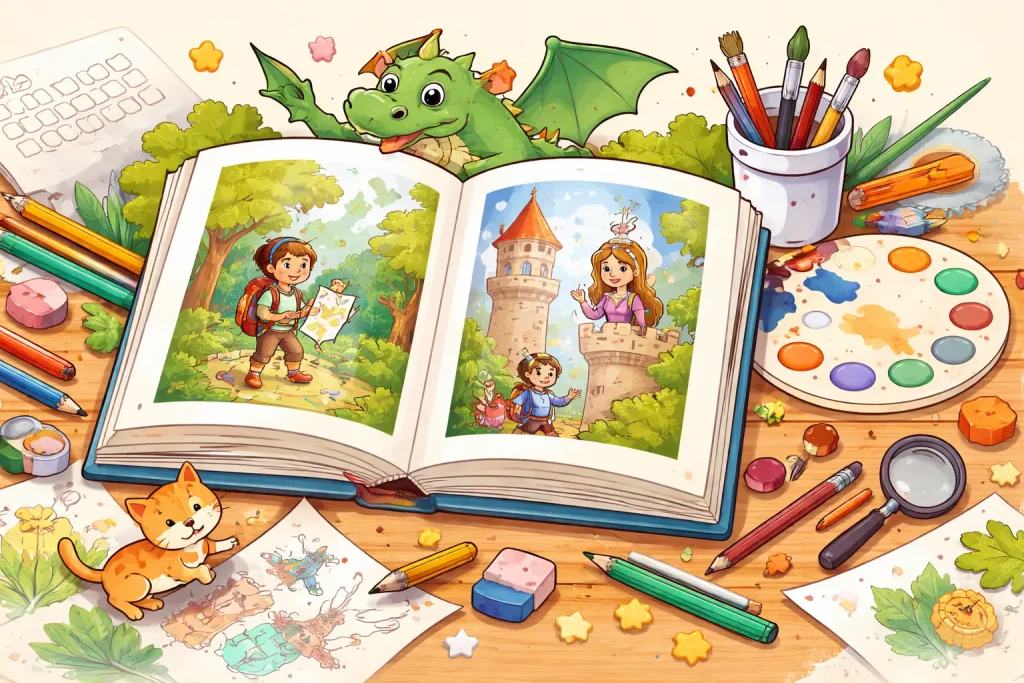
Understanding the Role of Illustrations in Books
Photographs are not mere space fillers. They put breathing life into stories. Words do not reveal what they depict. A tear on my cheek. A hidden smile. A magical landscape.
The book illustration design helps to bridge the bridge of text and imagination of the reader’s imagination. It sets the mood. It builds worlds. It renders narratives memorable.
These are crucial functions to be considered:
| Purpose | Impact |
| Emotional connection | Readers bond with visual characters |
| Story clarification | Complex ideas become simple images |
| Engagement boost | Readers pause longer on illustrated pages |
| Memory enhancement | Visuals stick in minds longer than text |
| Market appeal | Beautiful books sell themselves |
Great illustrations invite readers inside. They create experiences. They spark wonder. Your story deserves this gift.
The Step-by-Step Process
It is actually difficult to write a book. But in tiny steps, it is actually entertaining. Here is a crude manner of dividing it, along with a guide to drawing illustrations for kids’ books to make your story visually engaging and bring your characters to life.
- Rough Drafts: Use the minuscule sketching to enlarge them to make them more detailed, to refine your idea. This is the point at which you correct errors, correct proportions, tweak layouts, and make the poses appear more natural and expressive.
- Final Lines: Outlines should be defined using a dark pen or a clean digital brush. On this step, you concentrate on the development of smooth and firm lines that provide clarity as well as polish to your piece of art.
- Adding Color: It is the stage at which the art begins to pop and come to life. Use colors wisely to create the mood, provide depth, and improve the visual impressiveness of your illustration.
Making the Story Move
A good picture is eloquent, even without words. In case one of the characters is running, blow his or her hair. If they are scared, make their eyes big. This is a huge part of book Illustration Creation.
Use the Whole Page
Sometimes the art stays in a little box. Other times, it spreads across both pages! This is called a “bleed.” Using the whole space makes the reader feel like they are inside the book with the characters.
Leave Room for Words
Don’t forget the author! You have to leave “white space” or empty spots so the words are easy to read. If you draw over the whole page, the text might get lost in the bushes.
Perfecting Your Craft
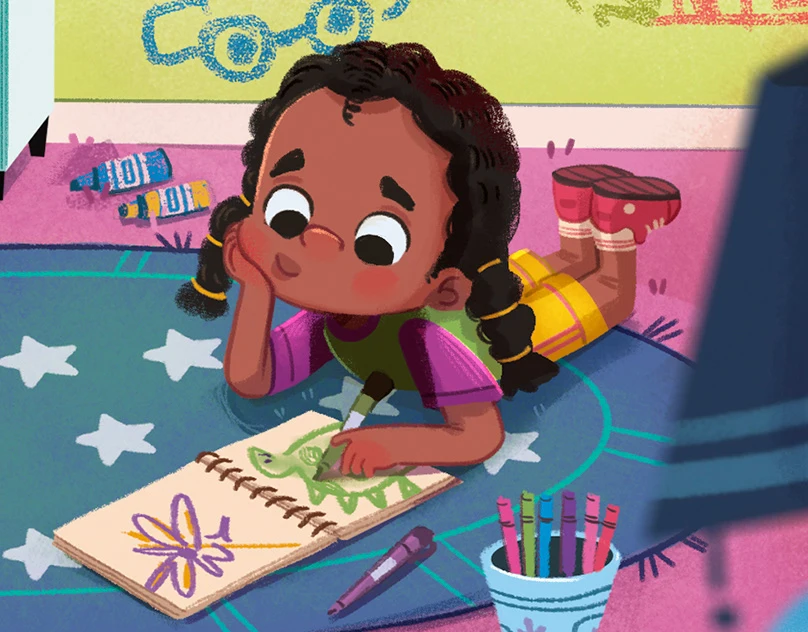
One can only improve through practice. It is not necessary to be concerned that your initial drawing is not very straight. Stick figures were also used, even by the most talented artists in the world.
Ask for Feedback
Seek advice from your mentor or professionals. Ask them their opinions on illustrations. When they manage to get the story by only looking at the picture, you are excellent at book illustration creation.
Lighting and Shadows
Shadowing is required to make your drawings appear three-dimensional. Think about where the sun is. When the sun is left, the shadow ought to be right. It is enchanted–it gives things reality!
Finishing Your Project
When you are finished with all your pages, examine them. Do they feel that they are in the same world? One more time, check the colors and the characters. Once all is the same, you are ready to provide the world.
Doing an art to a book is a large task, yet having your name on a cover is the most enjoyable experience. It is to continue to draw, to continue to dream, to continue to be curious!
The End Note!
Creation of efficient images involves imagination, patience, and careful planning. It involves artistic talent as well as having a clear picture of what you desire to say. All details, including composition and lighting, to color balance and perspective, are critical in determining how your audience relates to the story. The right angle and deliberate design decisions may turn a mere narrative into an entire experience, which is memorable.
Partner with Oxford Classic Publishers for design and publishing services for breathtaking illustrations and memorable creative perfection. Contact us today to bring your vision to life!
FAQs!
How do I start illustrating a book?
Read the manuscript carefully, identify key scenes, define the artistic style, create rough sketches, and communicate with the author to align expectations before developing final illustrations.
What software is best for creating book illustrations?
Adobe Illustrator, Photoshop, and Procreate are popular choices, offering advanced layering, precision tools, customizable brushes, color management, and high-resolution export suitable for print publishing.
How much does it cost to hire a book illustrator?
Costs depend on experience, style complexity, page count, revisions, and project scope, typically ranging from several hundred dollars to several thousand for detailed books.
What size and resolution should book illustrations be?
Illustrations should be created at 300 DPI resolution, use CMYK color mode for print, include proper bleed margins, and match the publisher’s required trim specifications.
Can I illustrate my own book without professional experience?
Yes, authors can illustrate their own books with practice, learning design fundamentals, mastering digital tools, seeking feedback, and dedicating time to improve skills.

 +1
713-396-2252
+1
713-396-2252